The King of Rock, Elvis Presley, would have turned 90 this year if he were still alive.
He had it all – a pink Cadillac, a gold Cadillac, Rolex on Monday, Omega by Tuesday. He flew in his own private jet and proudly carried a gold-plated Smith & Wesson.
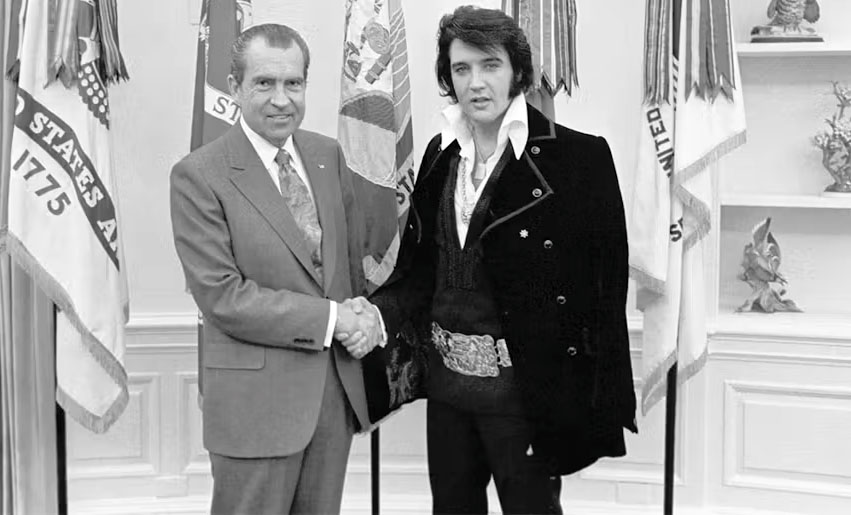
Elvis could do what no one else had done before: stroll up to the White House without an appointment and still get to meet the U.S. President.
President Nixon and Elvis. Photo: Ollie Atkins/White House
Cheap cigars and a leather-wrapped pipe
Yet despite all his wealth, power and fame – Elvis smoked real trash pipes. The reason for his choice of pipe? We’ll get to that.
When it came to cigars, Elvis wasn’t a connoisseur either.
There are only a handful of photos showing Elvis with a pipe, and no records of what kind of tobacco he preferred. But considering his eating habits, it wouldn’t be a stretch to assume he liked aromatics.
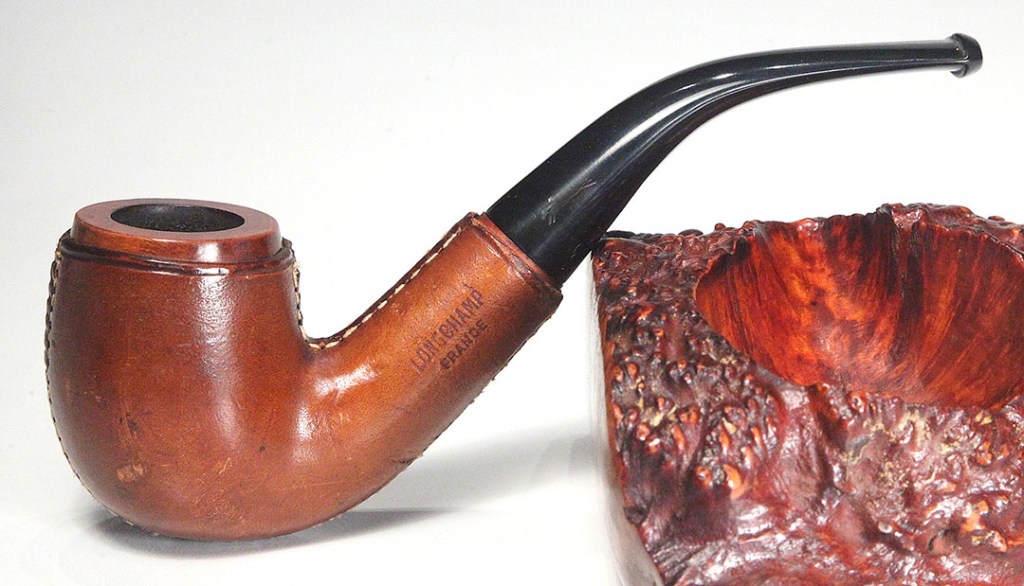
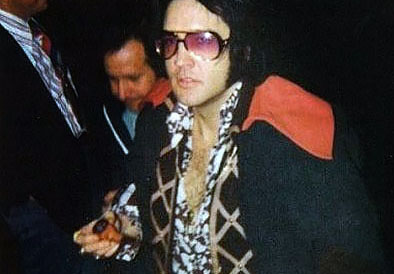
In one of the rare photos, Elvis is seen puffing on a pipe made by Longchamp.
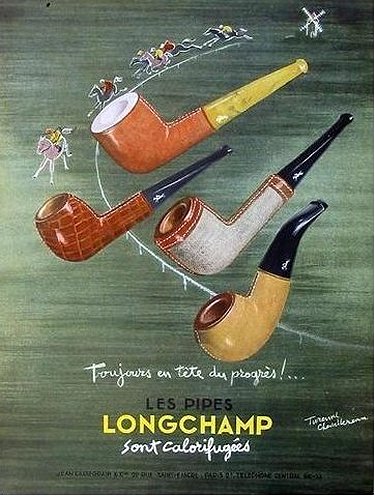
Longchamp was an old pipe company known for wrapping their pipes in leather.
A leather shell to mask second-rate briar – that was Longchamp’s genius.
Born out of war – wrapped in leather
Due to wartime restrictions in France during World War II, only low-quality briar wood was available. That’s when Longchamp came up with the brilliant idea of covering the pipes with leather to hide the fact that they were second-rate goods.
The unusual leather pipes drew attention and became especially popular among the many Allied soldiers stationed in Paris at the time. A success story was born.
Elvis wasn’t the only celebrity spotted with a Longchamp pipe, and eventually the company began crafting luxury versions using exotic leathers like alligator and pony.
But the winds were changing. The 1980s were approaching. People stopped listening to rock ’n’ roll – and stopped buying pipes.
Elvis died in 1977. A year later, Longchamp stopped making its signature skinned pipes.
Now, light cigarettes and synth music were all the rage.
Buzz Aldrin took both his tobacco pipe and wine into space. But once he landed on the moon, there was something else NASA didn’t want to go public.
Few have been celebrated and hailed like Neil Armstrong after he became the first man to walk on the moon.
A brave hero, a true patriot, and a shining example for humanity.
Buzz Aldrin, on the other hand, has humorously noted that while he came in second, he was the first to pee on the moon.
He even managed to sneak a sip of wine to the moon and almost caused a scandal upon landing.
And then there’s the story about the tobacco pipe in space…
Buzz Aldrin without his tobacco pipe in an official photo. Photo: NASA
It’s been over 50 years since Buzz Aldrin stepped onto the moon shortly after Neil Armstrong.
Every detail and every second of the first moon landing has been analyzed and featured both scientifically and in popular culture.
What hasn’t been widely talked about at NASA is when Buzz Aldrin brought his tobacco pipe into space or the wine to the moon.
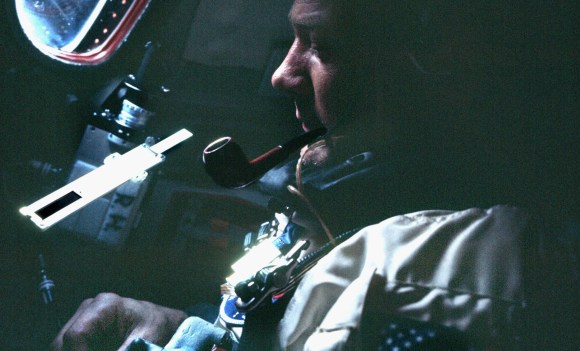
Buzz Aldrin in space with his tobacco pipe. Photo: NASA
Buzz Aldrin’s Moon Pee
”I may have been the second man to walk on the moon, but I was the first to pee there,” Buzz has mentioned in several interviews.
There’s a film clip of Buzz as he descends from the capsule, pausing on the ladder to lift one leg. This legendary but perhaps less significant moment in space history is captured by the first man, Neil Armstrong.
The clip of Buzz Aldrin extending one leg as he descends onto the moon
Fortified himself with wine
Just before Buzz Aldrin made history with the first moon pee, he had fortified himself with a bit of wine.
After the iconic words ‘The Eagle has landed’ were announced, the two astronauts had to stay in the capsule for a few hours for safety reasons, eating and resting before they could open the door to step outside.
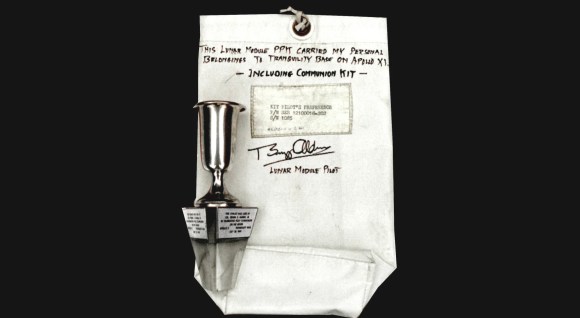
During this time, Buzz pulled out the wine he’d brought along. With a communion wafer, he planned to have a little religious ceremony, just like Christopher Columbus did when he reached the New World.
Communion items that Buzz Aldrin brought to the moon. Photo: NASA
Concerns at NASA
Buzz Aldrin initially planned to share his religious ceremony with the rest of the world in a broadcast from the moon. However, a woman named Madalyn Murray O’Hair put a stop to that.
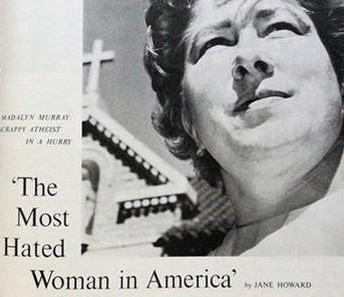
She was an atheist activist and founder of ‘American Atheists.’ In 1964, Life magazine named her the most hated woman in America after she successfully lobbied the Supreme Court to ban Bible reading in American public schools.
In her campaign for the separation of church and state, Madalyn Murray O’Hair also filed a lawsuit against NASA after the Apollo 8 crew read from the Book of Genesis about how God created heaven and earth. This Christian message from space was broadcast on Christmas Eve 1968.
At NASA, they were literally scared stiff after Madalyn Murray O’Hair’s lawsuit.
As a result, Buzz Aldrin’s request to share his ceremonial moment with the world was denied. NASA flight control advised him to tone it down.
From ‘The Eagle,’ Buzz only said a few carefully chosen, general words inviting people to join him in a moment of contemplation and silence while he took communion.
He later wrote in his book ‘Magnificent Desolation’ that he somewhat regretted the religious gesture.
Madalyn Murray O’Hair was named the most hated woman in America after she succeeded in getting the Supreme Court to ban official Bible reading in American public schools.
The U.S. Supreme Court never took up the case against NASA, as it was determined that they lacked jurisdiction over space.
Brought the pipe to space
On a previous space mission, Gemini 12, Buzz Aldrin brought a pipe with him. As the enthusiastic pipe smoker he was at the time, he described how he could hardly wait to get into orbit so he could take out the pipe and bring it to his mouth. Of course, he couldn’t light the pipe up there, but the moment was captured by a fellow astronaut aboard Gemini.
NASA hasn’t made much effort to publicize this less significant moment in space history either.
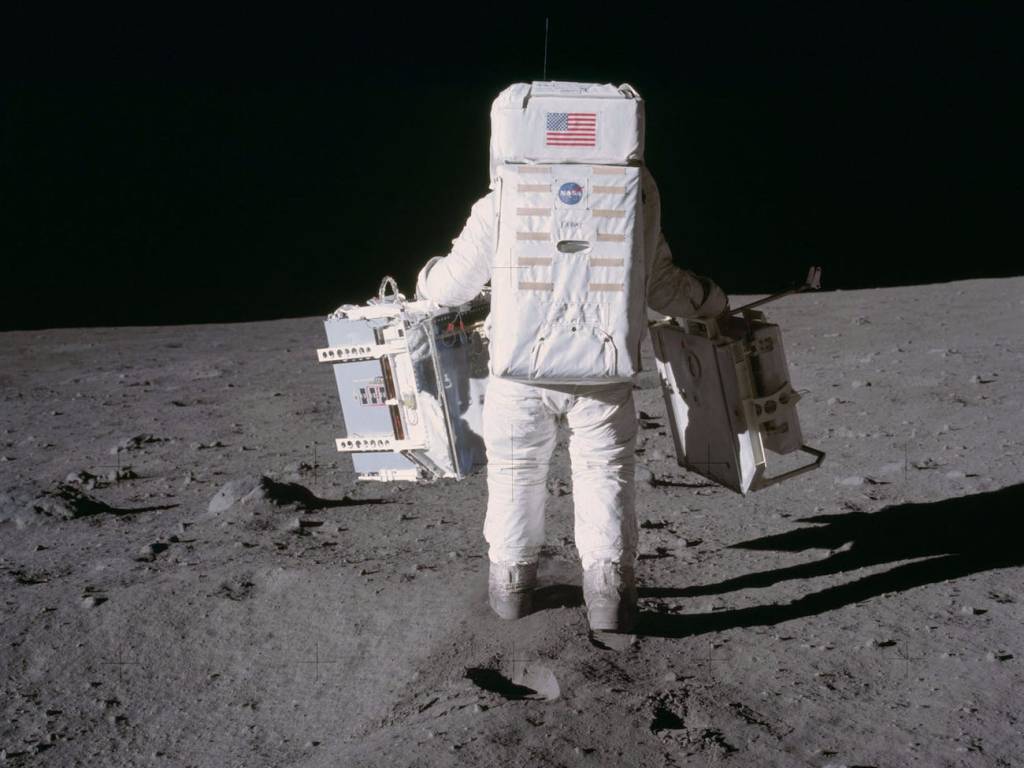
Buzz Aldrin sets up instruments on the moon. Photo: NASA
The Story of How Santa Went from a Jolly Pipe-Smoking Saint to a Soda-Loving Softie.
Santa of Yesteryear – Always with a Pipe in His Mouth
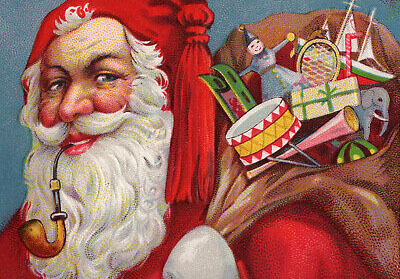
For centuries, Santa Claus was often depicted cheerfully puffing on his pipe while busy with Christmas preparations. He usually looked jovial, with a rosy glow on his cheeks more often than not.
He seemed to favor curved or semi-curved pipes, though he’s been seen with many styles over the years.
Santa started his journey as a bishop in Patara, in what is now Turkey, around the 4th century. Back then, he was known as Saint Nicholas, a pious man renowned for his generosity.
Santa’s Favorite Tobacco
It’s easy to imagine him filling his pipe with Izmir or another dark oriental tobacco grown in the region.
Perhaps it was spiritual contemplation that led him to leave the bishopric, move to the North Pole, and dedicate himself full-time to spreading joy with his generosity.
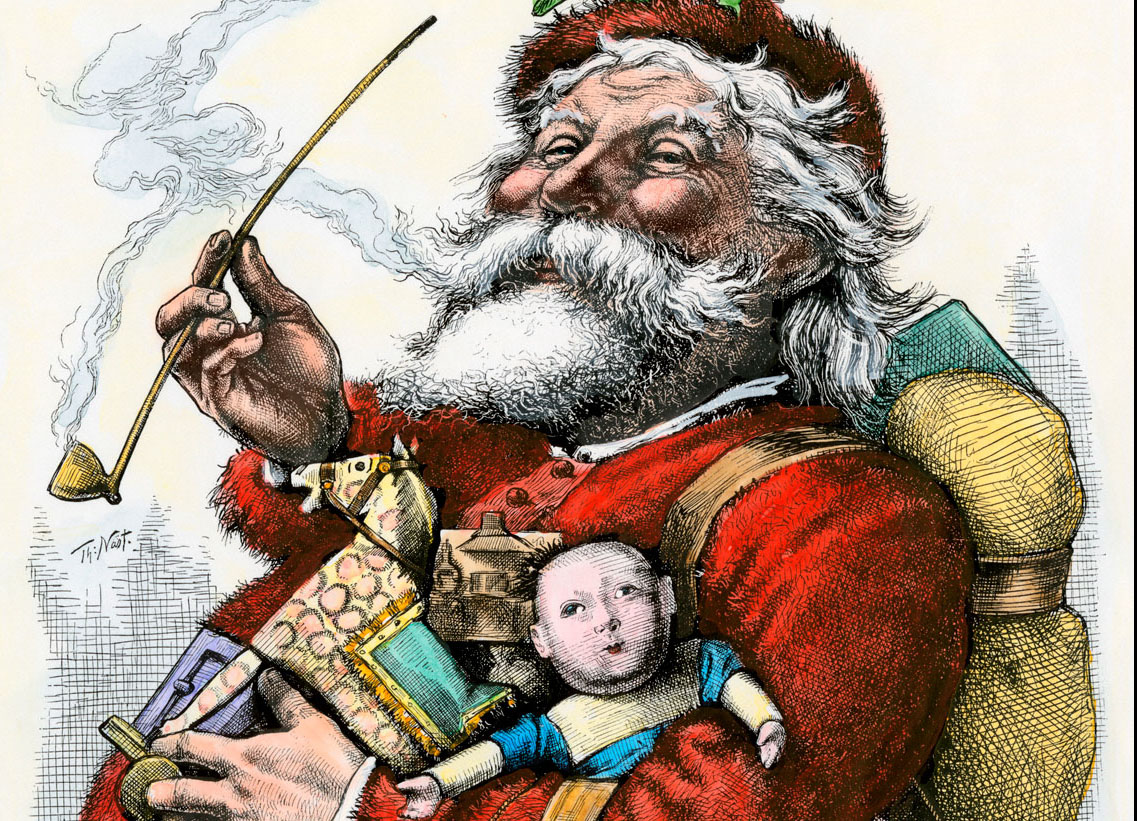
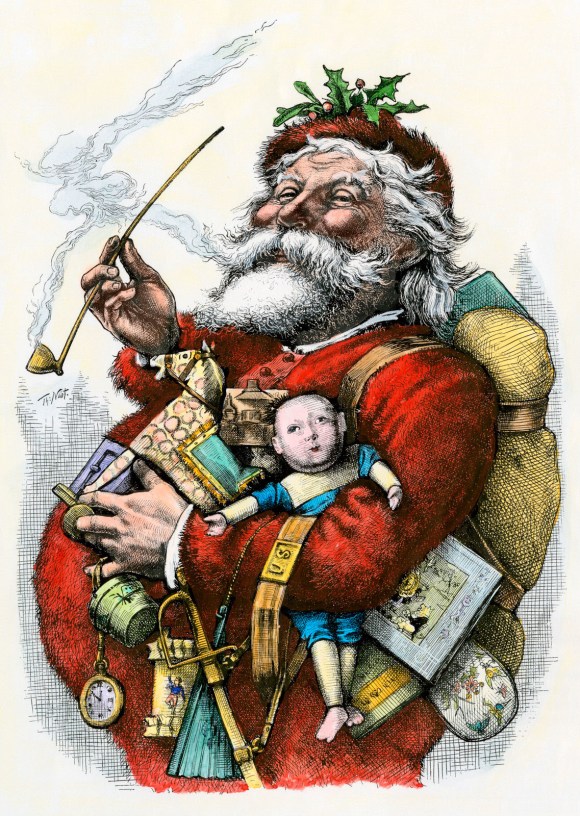
In 1881, he was immortalized in a classic image, happily puffing on a churchwarden pipe while on his way to deliver Christmas gifts. That may well have been when he had the most fun.
Thomas Nast’s iconic depiction of Santa Claus enjoying his churchwarden pipe.
Whether it was a lapse in judgment or simply getting swept up in the spirit of the roaring 1920s is hard to say, but he can’t blame youthful recklessness for briefly taking up cigarette smoking during that era.
Santa Claus smoking a cigarette in a 1920 advertisement.
Order was eventually restored, and we once again saw Santa good-naturedly puffing on his pipe. As tradition demands—at least in Sweden—he would also graciously accept a shot of schnapps when delivering gifts.
Neither tobacco nor schnapps were allowed for Santa after Coca-Cola entered the picture. His beard became more neatly groomed, and his roundness less pronounced.
In the 1930s, Coca-Cola wooed him over. It was no longer considered appropriate for him to drink anything other than a certain fizzy soda or to smoke.
Just over a decade ago, Santa definitively stubbed out his last smoke. Canadian entrepreneur, anti-smoking advocate, and publisher Pamela McColl released a smoke-free version of the classic ’Twas the Night Before Christmas. The New York Post and Vanity Fair were the first to report the news, which quickly spread across global media.
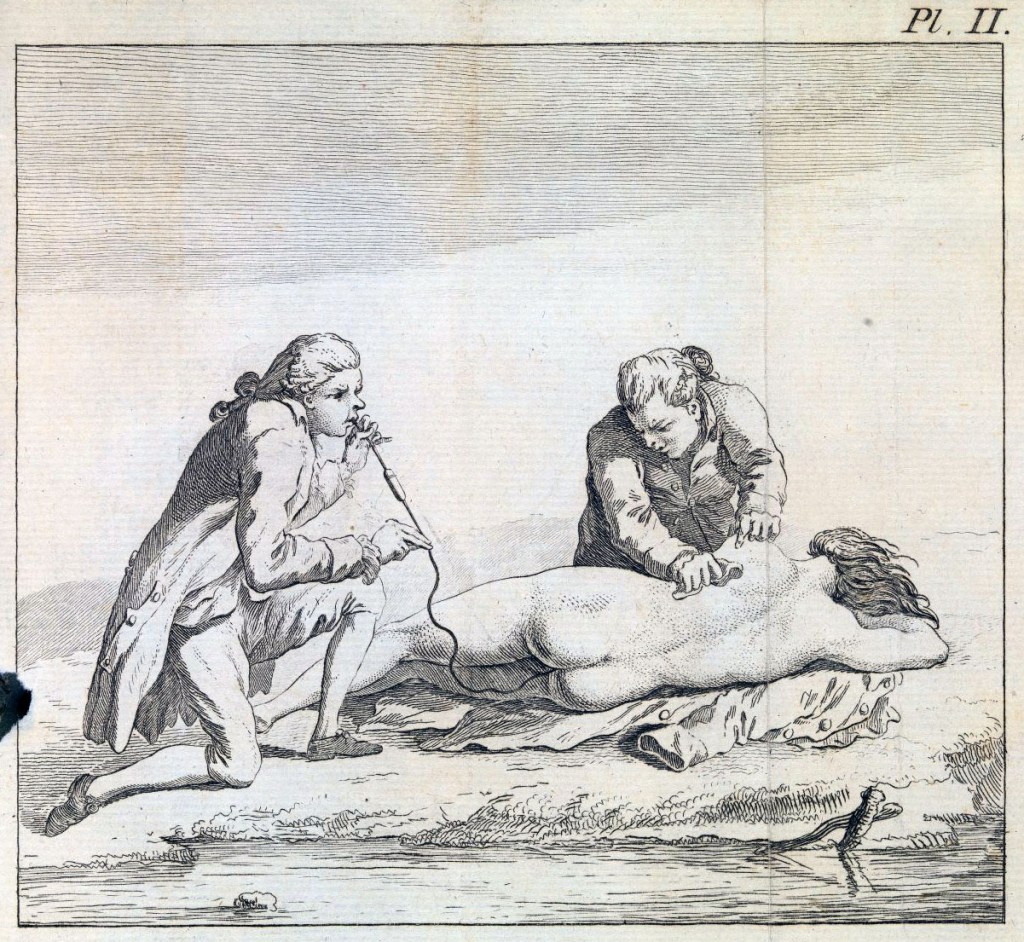
A drowned, seemingly lifeless woman was pulled from the water.
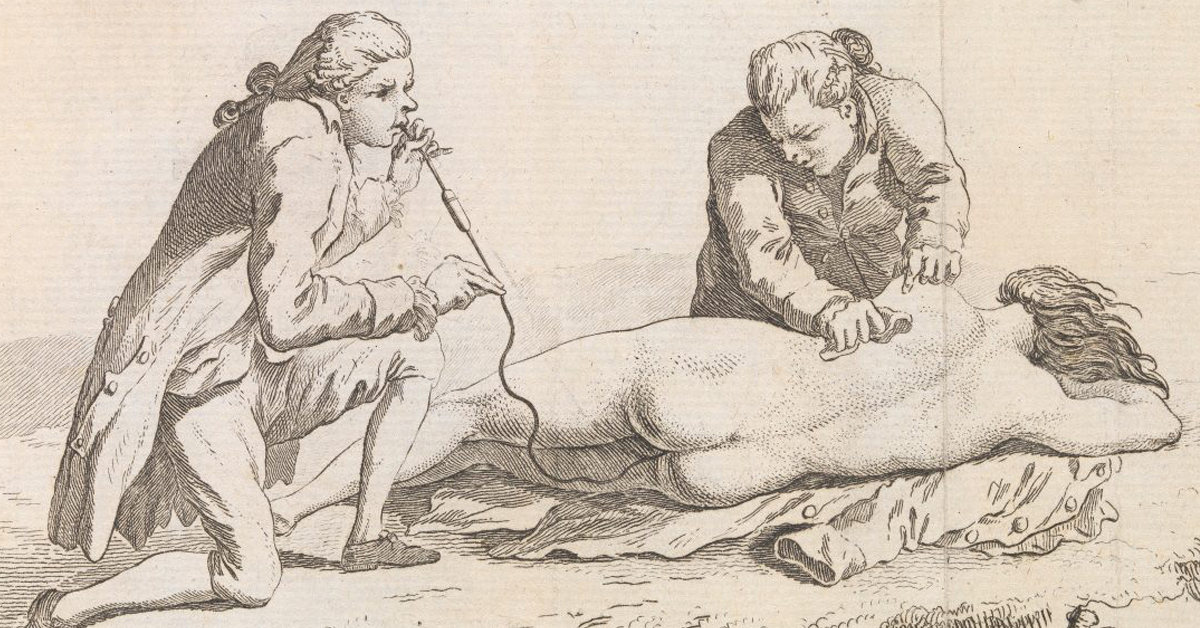
Her desperate husband received advice from a passing sailor to introduce tobacco smoke into his wife’s rectum. The man found a pipe, lit the tobacco, inserted the mouthpiece, and blew smoke into her rear.
As if by miracle, the woman regained consciousness.
The year was 1746, and this is one of the first documented cases where this method was used to save a life.
The technique quickly spread across Britain, then to Germany and France. Soon, it became standard medical practice for reviving drowning victims across Europe, according to the esteemed medical journal The Lancet.
Tobacco smoke better in the rear
Introducing tobacco smoke rectally was considered superior to blowing air directly into the lungs. According to medical experts of the time, it not only dried and warmed the body from the inside but also stimulated both the lungs and the heart.
Nicotine was then regarded as a cure-all for various ailments, from hysteria and headaches to “women’s diseases.”
A tobacco pipe typically has a mouthpiece about 15 centimeters long, which is perhaps not the most desirable tool for blowing smoke into someone’s posterior.
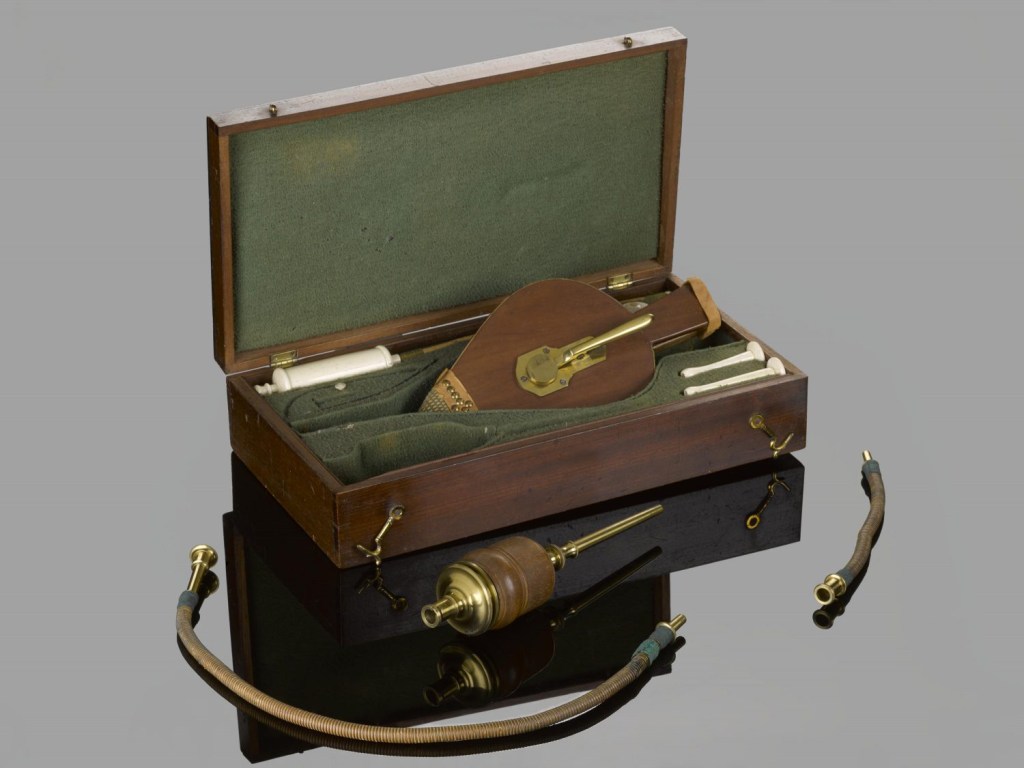
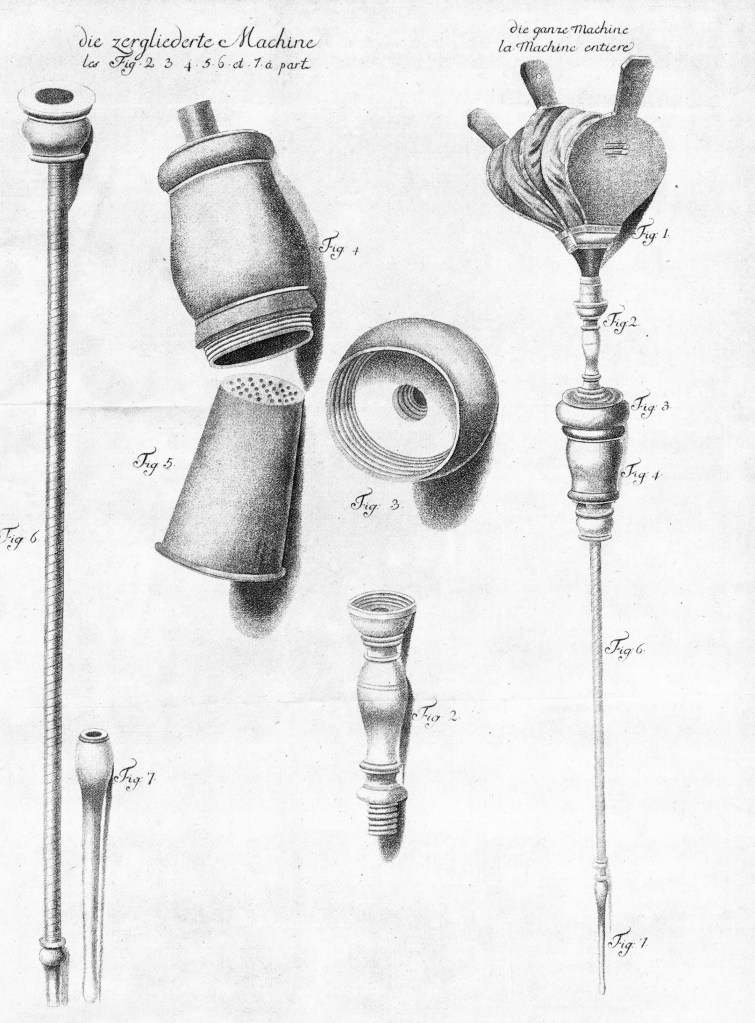
Machine for blowing tobacco smoke
Special life-saving kits began to be mass-produced in various parts of Europe. The apparatuses were then distributed along the Thames by the Royal Humane Society. They also established infirmaries where drowning victims could be taken to be revived using tobacco smoke and nicotine.
The organization is still active under the protection of the British royal family, although nowadays it uses different methods to save lives.
The first instruments for blowing smoke could lead to unpleasant surprises if you happened to inhale instead of blowing. Therefore, the modern resuscitation devices with bellows quickly became popular.




 About the Fine Pleasure of Pipe Smoking