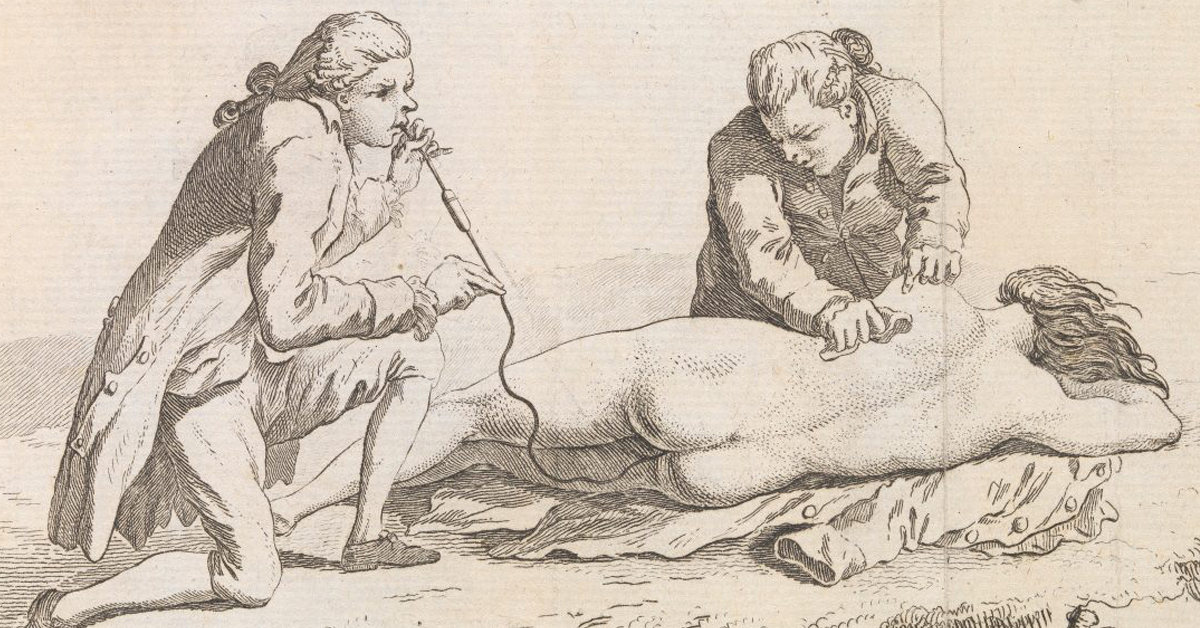
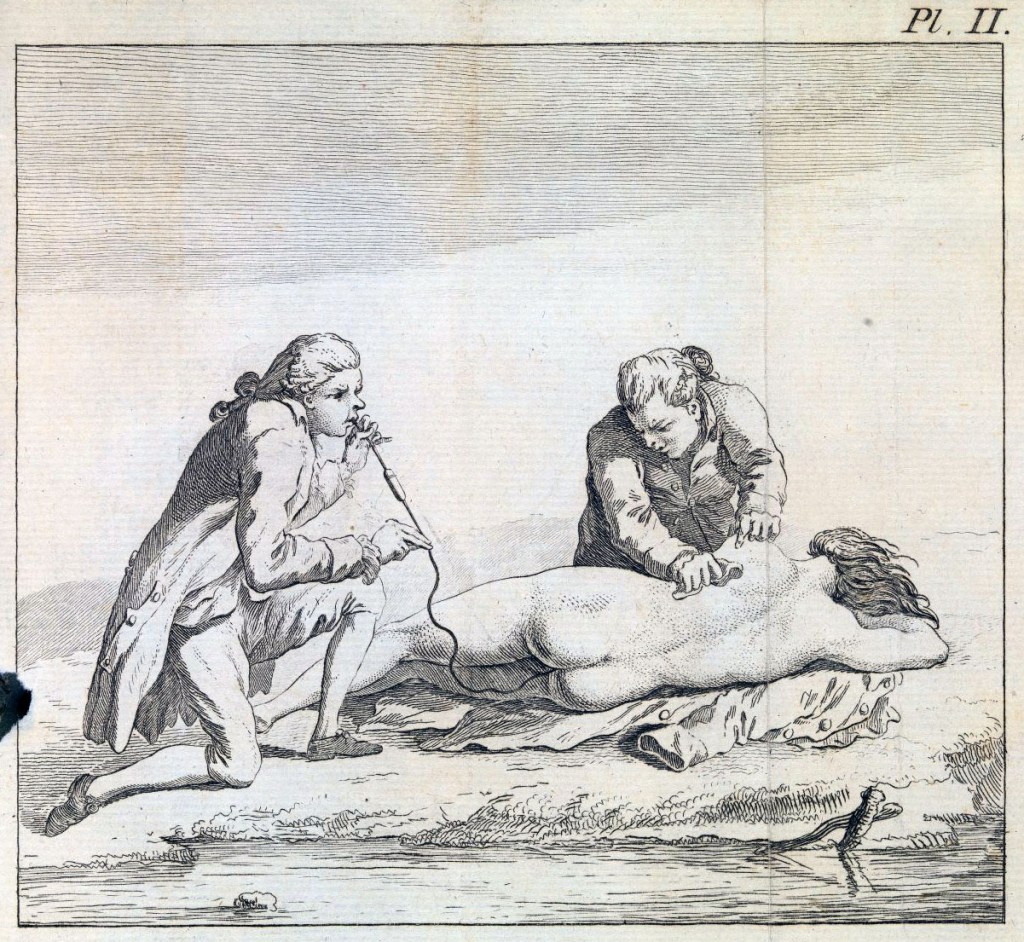
A drowned, seemingly lifeless woman was pulled from the water.
Her desperate husband received advice from a passing sailor to introduce tobacco smoke into his wife’s rectum. The man found a pipe, lit the tobacco, inserted the mouthpiece, and blew smoke into her rear.
As if by miracle, the woman regained consciousness.
The year was 1746, and this is one of the first documented cases where this method was used to save a life.
The technique quickly spread across Britain, then to Germany and France. Soon, it became standard medical practice for reviving drowning victims across Europe, according to the esteemed medical journal The Lancet.
Tobacco smoke better in the rear
Introducing tobacco smoke rectally was considered superior to blowing air directly into the lungs. According to medical experts of the time, it not only dried and warmed the body from the inside but also stimulated both the lungs and the heart.
Nicotine was then regarded as a cure-all for various ailments, from hysteria and headaches to “women’s diseases.”
A tobacco pipe typically has a mouthpiece about 15 centimeters long, which is perhaps not the most desirable tool for blowing smoke into someone’s posterior.
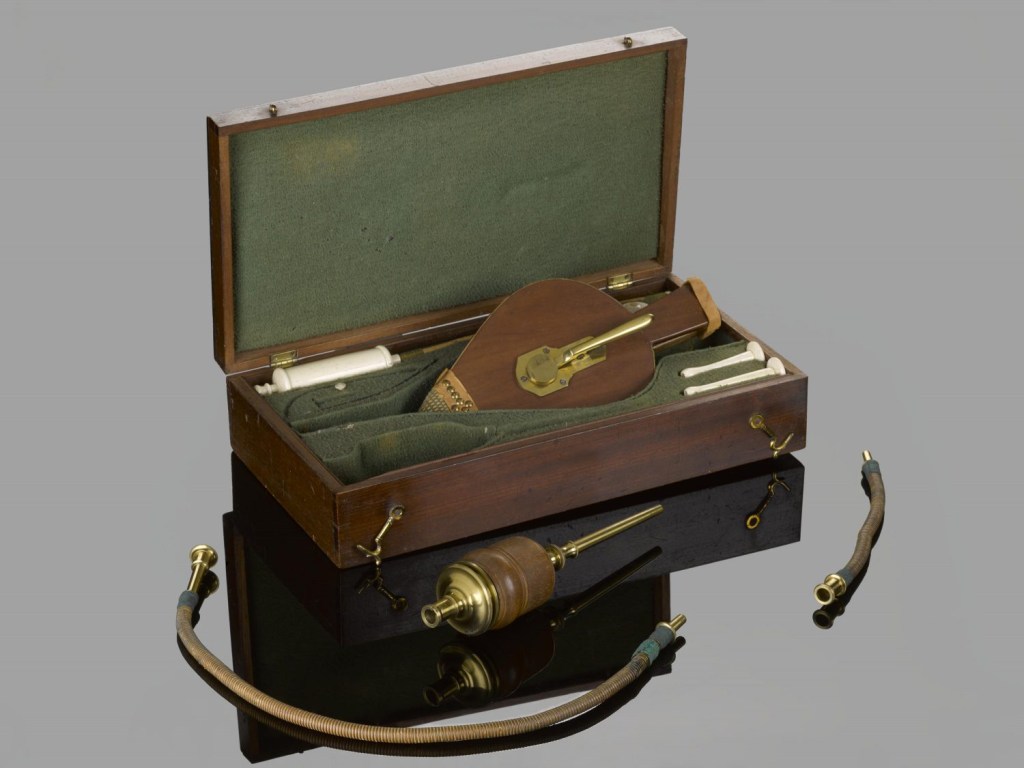
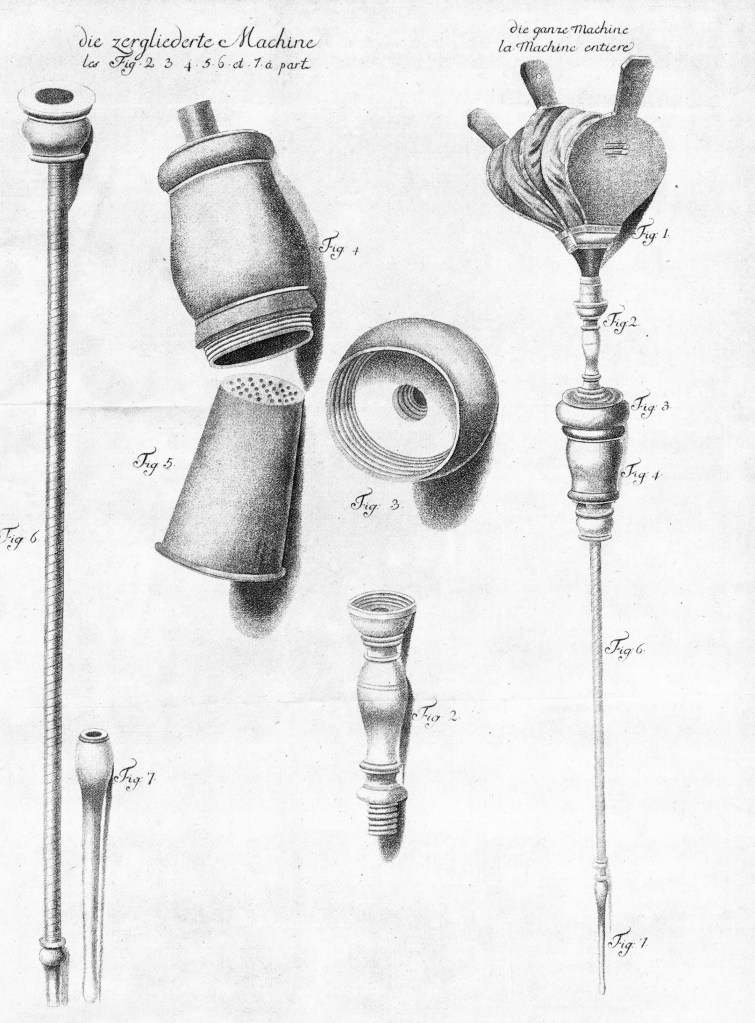
Special life-saving kits began to be mass-produced in various parts of Europe. The apparatuses were then distributed along the Thames by the Royal Humane Society. They also established infirmaries where drowning victims could be taken to be revived using tobacco smoke and nicotine.
The organization is still active under the protection of the British royal family, although nowadays it uses different methods to save lives.
 About the Fine Pleasure of Pipe Smoking